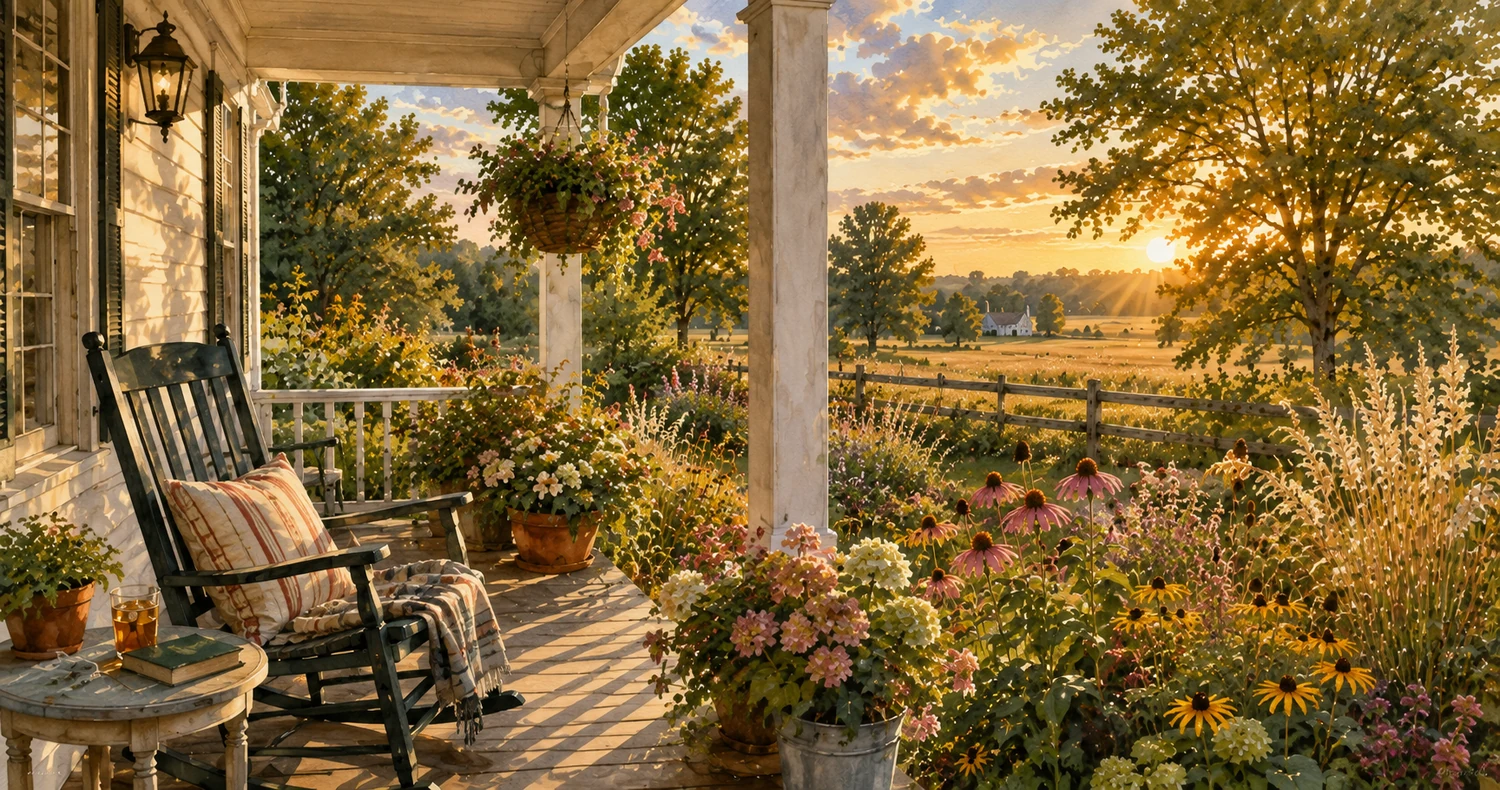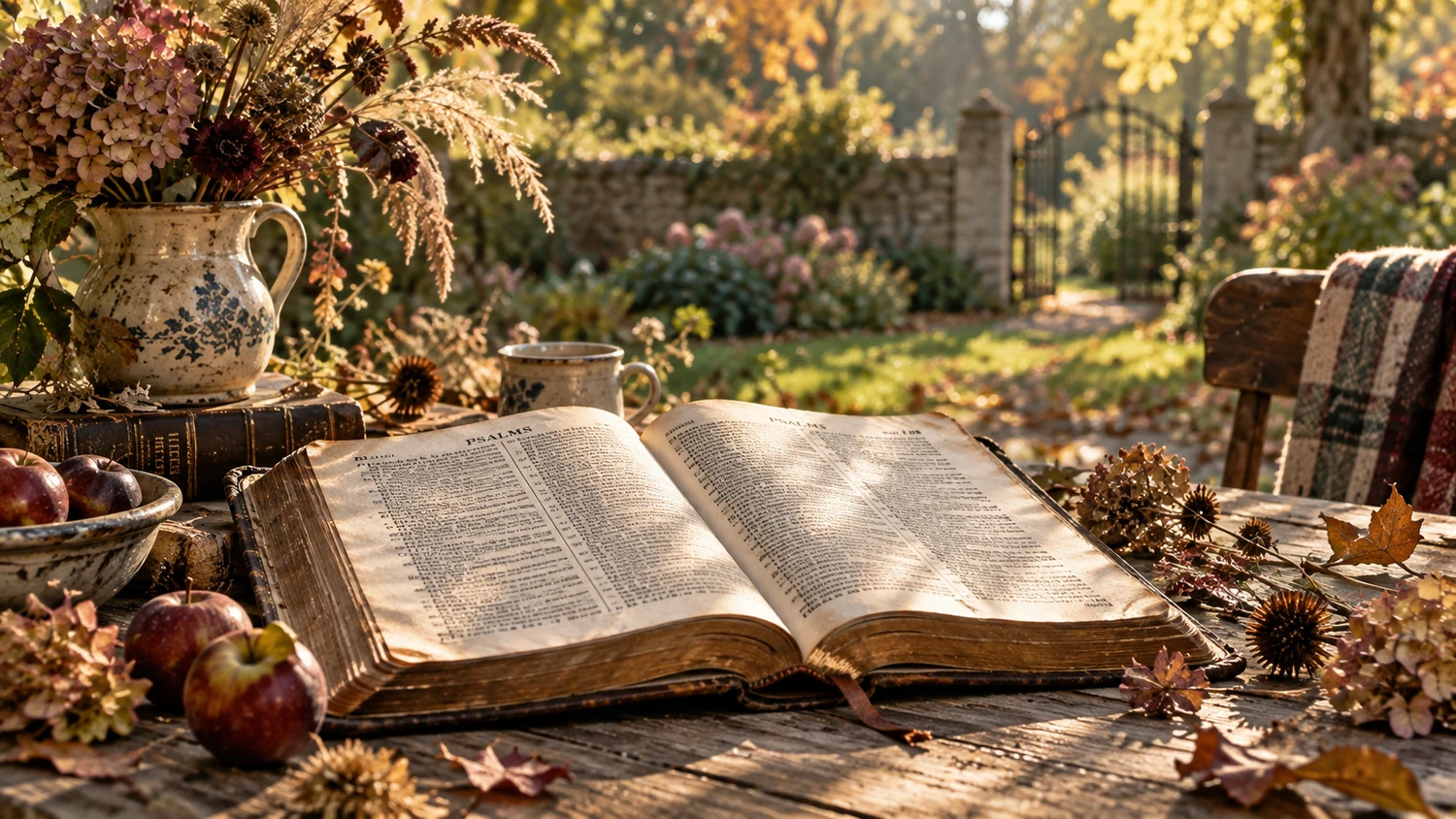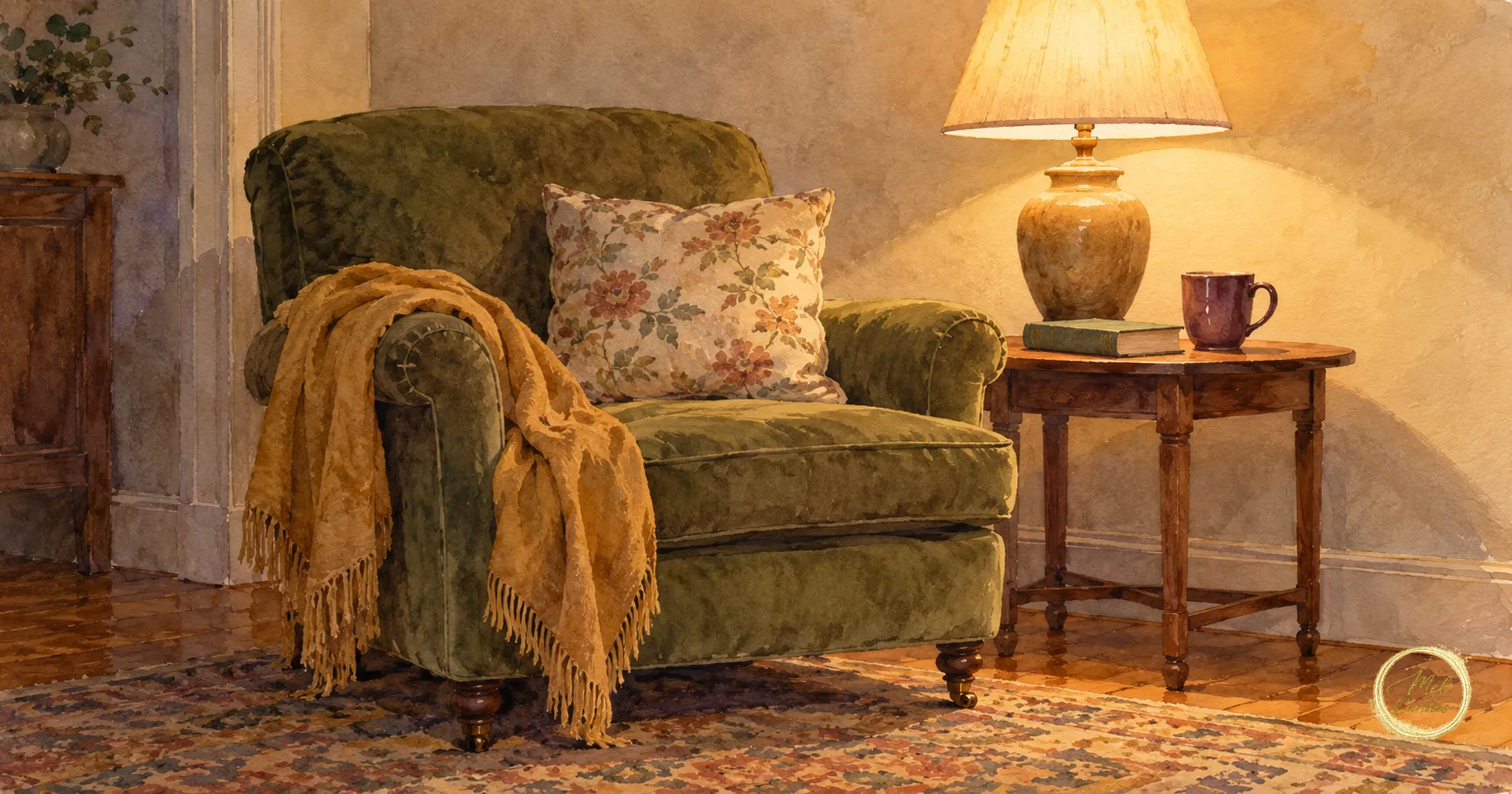
The pumpkins arrive, and suddenly every mantelpiece seems to have joined in. There are velvet ones, ceramic ones and whole families of little ones gathered on trays, and I’ll admit, the struggle to resist them is real. Every year brings another colour or style to tempt us, and once you start, where do you stop? My pockets certainly aren’t deep enough to indulge every season, however persuasive a little pumpkin can be. So I’ve been thinking about other ways to make a home feel like autumn without pumpkins, and, beginning with what’s already there.
There’s much more to autumn than its most recognisable ornament. Think of the colours in a fruit bowl, the pleasure of a lamp-lit room, or a favourite chair made more inviting with a different cushion. These changes can belong comfortably in a home with books on the table and the usual everyday life going on around them.
For autumn decor without pumpkins, start by looking at what your room already offers. The ideas below will help you bring in seasonal colour, texture and atmosphere, whether you’re welcoming cooler evenings or enjoying autumn somewhere the weather is still warm.
Start with the colours already in your room
Autumn gives you a generous palette to choose from. There’s the deep purple of a fig, the pink-brown of a fading hydrangea and the yellow-green of a pear, as well as familiar rust and gold. You can draw on whichever part of it sits happily with your furnishings.
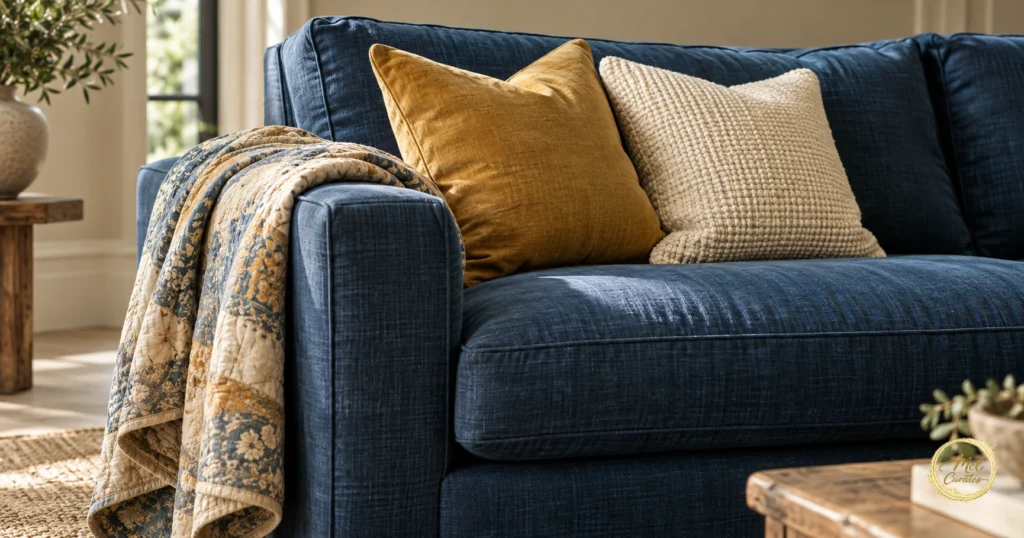
If your sofa is blue, try a cushion in muted ochre and see how the colours look together. A cream room might welcome olive or a little plum; beside dark wood, pale linen can give richer colours some breathing space. Choose one colour to introduce first, keeping the larger pieces you already have as your starting point.
Look through your cushion covers and table linen before you shop. Something put away earlier in the year may look different alongside the colours you’re using now. Even moving a ceramic jug from the kitchen to a side table can bring a useful patch of colour into a room. I have tried various botanical arrangements in different receptacles before – slim branches in pretty bottles, flowers or greenery in pitchers and jugs – they worked beautifully for me.
The idea is try it where you’ll see it, then leave it there for a day or an evening before deciding what else to change.
Change the texture of one familiar corner
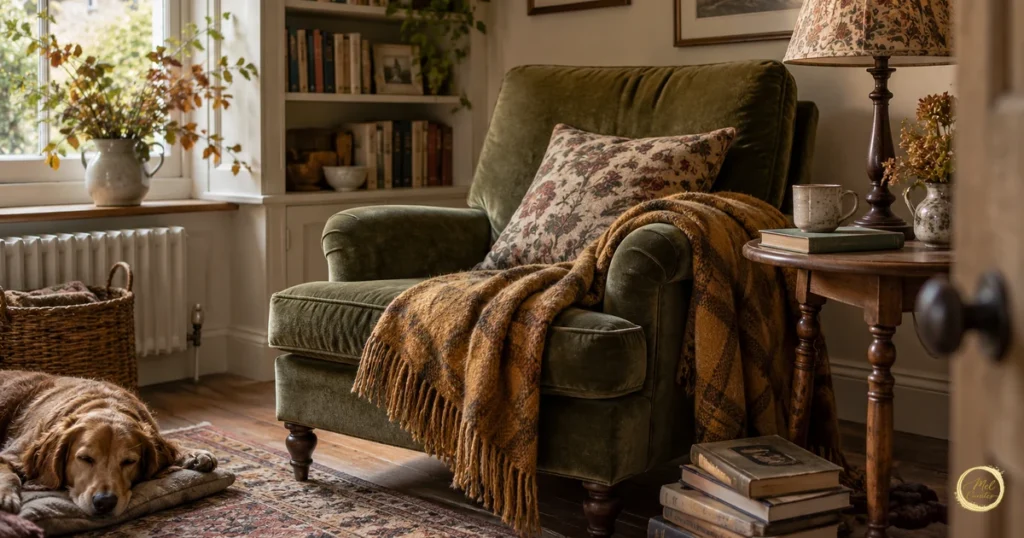
A woven throw over a chair has a different presence from a smooth cotton one. Velvet catches the light differently from linen. Those small contrasts can give a familiar corner a more autumnal feel, even when the colours stay much the same.
On a sofa, try pairing a plain cushion with one that has a visible weave, or bring out a quilt and fold it over the arm. If you like pattern, a check or a faded floral can add interest without needing a matching collection. Let an existing favourite lead the arrangement: a patterned cushion might give you the colour for the throw beside it.
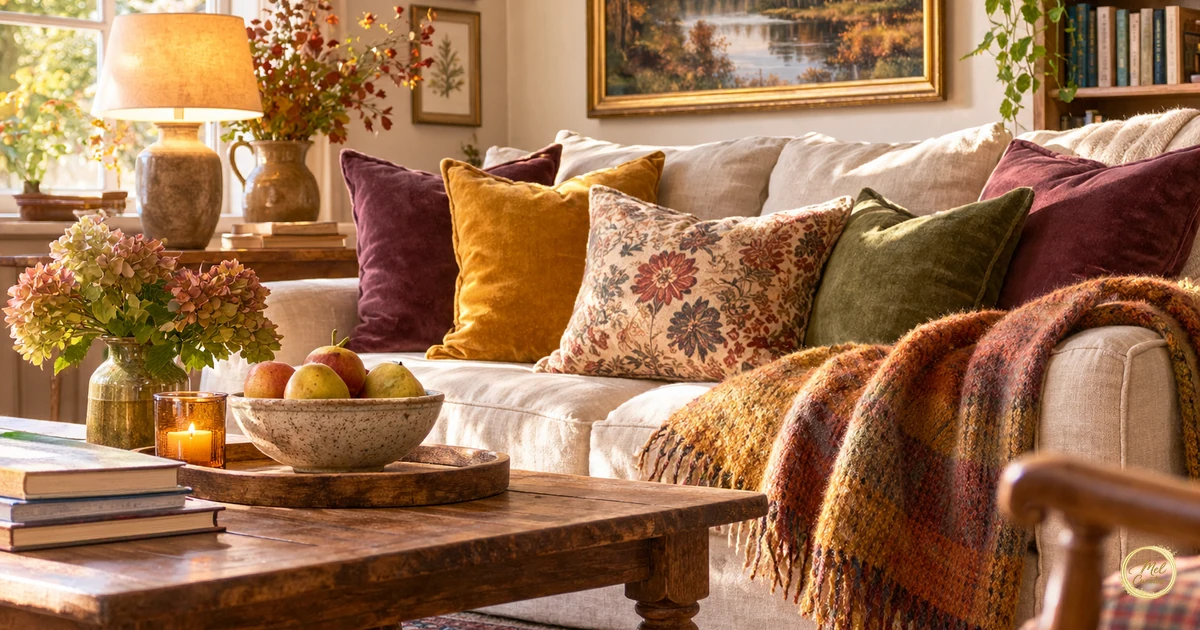
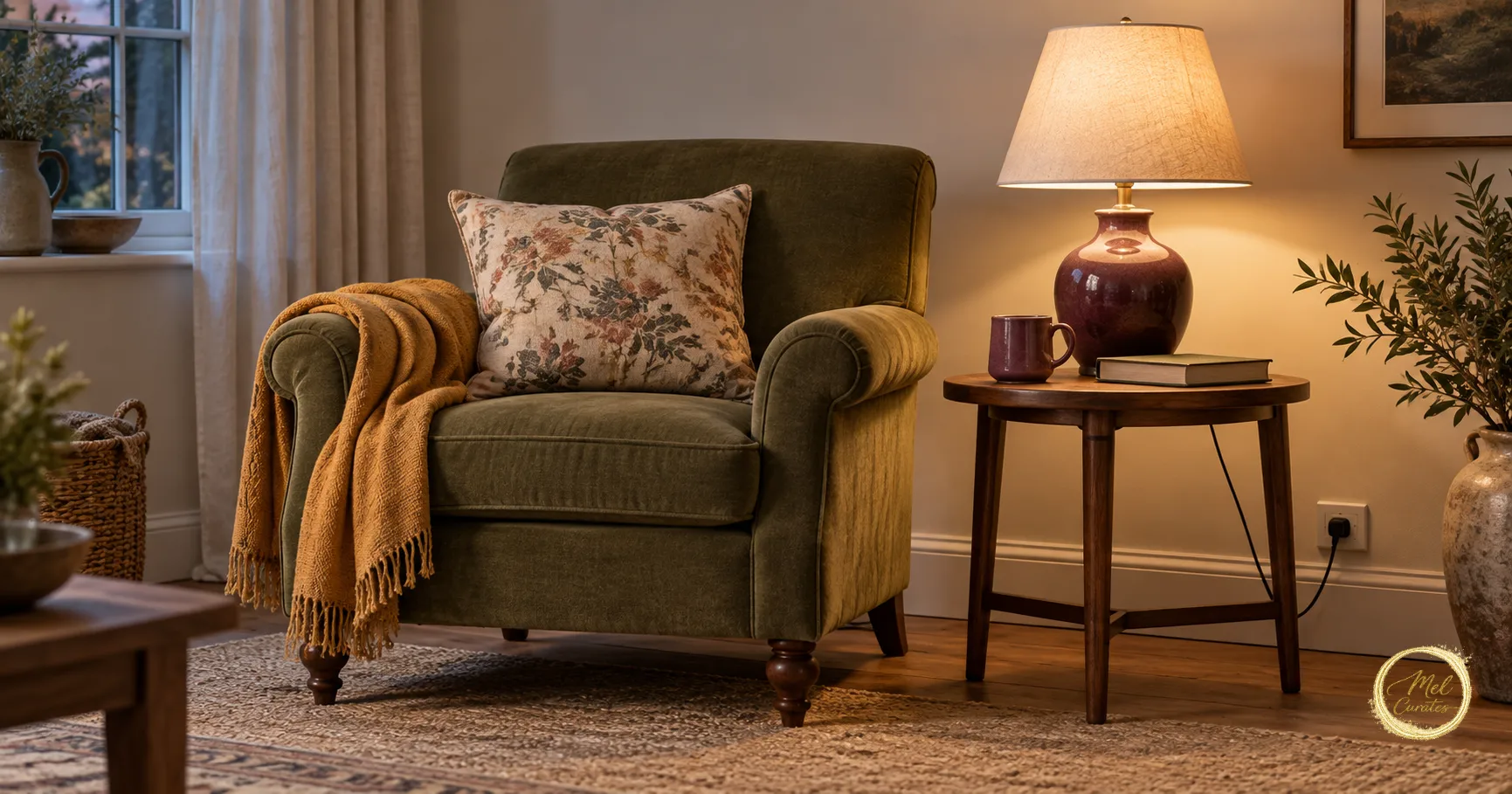
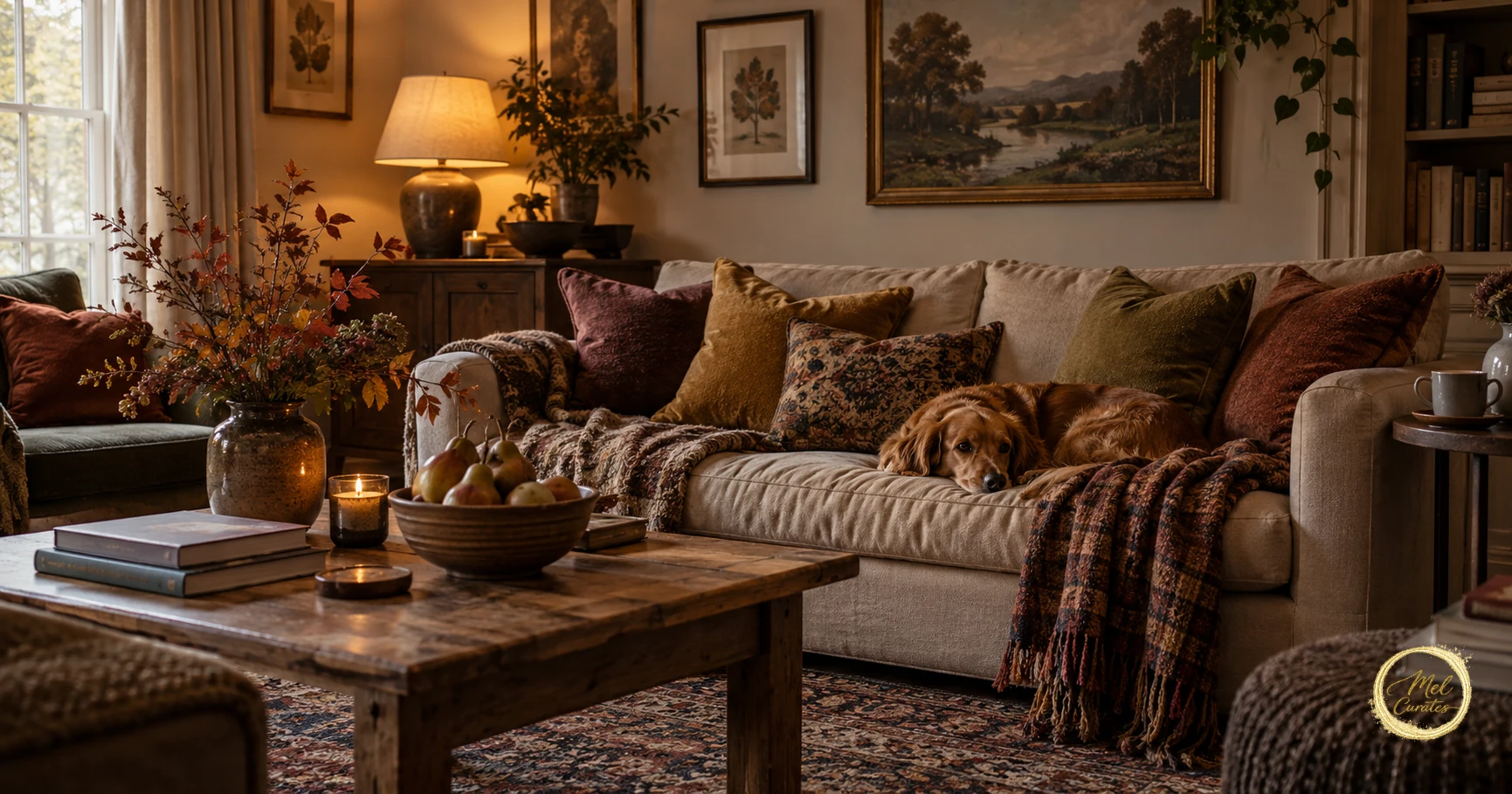
Make the corner comfortable to use as well as pleasant to look at. The blanket should be within reach, and there should still be room to sit down without relocating half the cushions.
As much as I love cushions, I know not everyone wants to navigate a small mountain of them just to get comfortable! A large woven basket nearby is an easy solution — somewhere to tuck away any cushions that are in the way, keeping the space looking inviting without sacrificing its practicality.
Where autumn remains warm, cotton, linen and lighter woven fabrics can give you texture without the weight of wool. The season can be welcome even while the air conditioning is on.
Let the lighting do some of the work
Look at your room in the evening, when you’re likely to spend time there. Where does the light fall? A lamp beside an armchair can make a reading corner feel inviting, while one on a sideboard can bring a favourite picture or ceramic bowl into view.
Try switching on your lamps before the main ceiling light. You may find that the room already has the atmosphere you were looking for. If one corner feels gloomy, consider whether an existing lamp would be more useful there. Keep enough light for whatever you’re doing, particularly reading, and position it so the bulb isn’t glaring directly into your eyes.
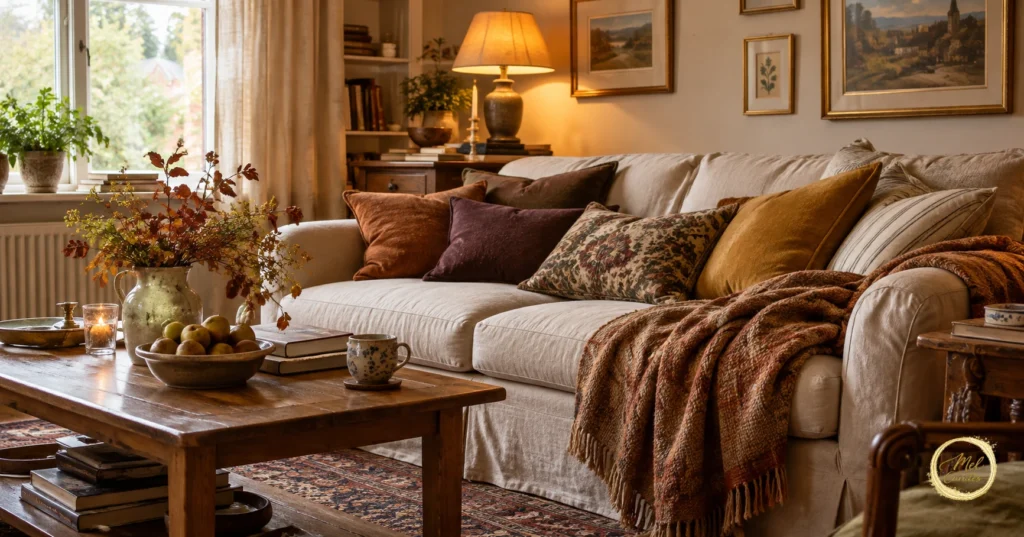
A small LED or regular candle can add a warm glow to an evening table. Set it beside the things you’re using for supper and see how it looks before building an arrangement around it. The table gains something seasonal while remaining ready for a meal.
Bring autumn to the table
Fruit makes an appealing seasonal display because it earns its place in the kitchen. Put pears in a shallow bowl, or gather a few apples on a favourite plate. Their uneven shapes and changing colours bring interest without much arranging, and the display gradually disappears into lunches and puddings.
Flowers offer another route. Where they’re available, dahlias, asters and chrysanthemums bring a wide choice of autumn colours. A small bunch in a jug can be just as pleasing as a large arrangement, especially when you choose a colour that picks up something already nearby. Dried stems may suit the room too, if you enjoy their shapes and softer tones.
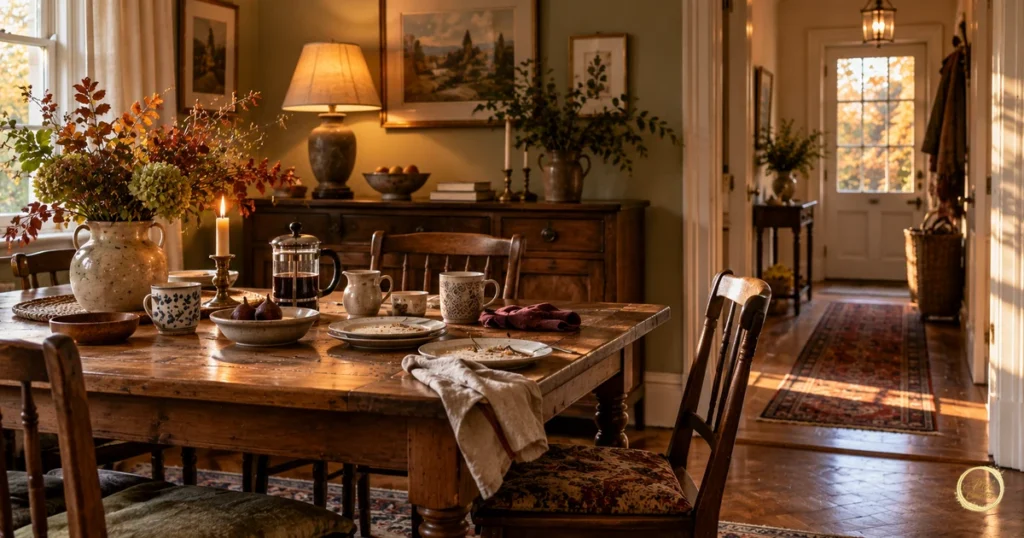
For a dining table, keep the arrangement low enough for conversation and small enough to leave space for serving dishes. On a narrow kitchen table, a single flower in a small bottle can give you the detail you’re after. A patterned cloth or linen napkins can carry the rest of the colour, if you want more.
Make room for autumn habits
What would you enjoy doing at home this autumn? Perhaps you’d like to read in the evenings, bake at the weekend or have someone round for tea. Arranging a little space for that can make the seasonal changes feel more personal.
For reading, put the book you actually want to open beside a comfortable chair, with somewhere to set down a cup. If tea is part of your evening, bring a favourite mug to the front of the cupboard and keep a tray handy for carrying it through. An autumn corner becomes more appealing when it offers something you’ll use.
Give the entrance a little attention too. A clear surface for a visitor’s bag, a place for shoes and a lamp switched on before someone arrives can make the welcome feel considered. If you enjoy seasonal decoration there, add it around the space you need for coming and going.
Try a fifteen-minute “autumn without pumpkins” refresh
Choose a corner you’ll use tonight and spend five minutes clearing away anything that belongs elsewhere. Take another five to try a textile or colour you already own in that space. During the final few minutes, adjust the lighting and add a seasonal detail if you’d like one, such as fruit or a flower.
Then sit down. Is there somewhere for your cup? Can you read comfortably? Do the colours please you now the lamp is on? Move things until the corner works for you; the first arrangement is only a starting point.
You may still want a pumpkin by the door. You may prefer pears on the table and a plum-coloured cushion on your usual chair. Either way, the pleasure comes when those choices become part of an evening you enjoy: a room that feels like yours, with autumn finding a place in it.
And perhaps the nicest part of decorating for autumn is discovering that much of what you need is already there. The old wooden bowl, the books you’ve collected over the years, a favourite piece of pottery or the blanket that’s followed you from one home to another. These things bring something to a room that no amount of seasonal shopping can quite replace.
I’ve been thinking more about this in The Meaningful Autumn Home: Decorate With Things You Already Love, where we explore how familiar possessions, personal memories and a few thoughtful changes can make a home feel especially welcoming.
Stay a little longer
If something here gave you reason to pause, notice or look again, there’s more quiet encouragement, Scripture, seasonal beauty and everyday noticing across Mel Curates.
Follow along on
And if this reflection made you think of someone, you’re always welcome to share it.