
There is probably something in your home that would never make it into a beautifully styled interiors photograph, but you would miss it terribly if it wasn’t there. A chair whose best days are a matter of opinion. A mug with a comfortable handle. The blanket that has spent so many evenings keeping someone warm that it no longer folds into anything resembling a rectangle.
These things have a place in a meaningful autumn home. Before we start wondering what the room needs for the season, it’s worth noticing what it already holds: objects we have chosen, things we have been given, and a few possessions that seem to have become part of the family without anyone formally inviting them.
As the evenings draw in, there is pleasure in bringing some of those familiar things closer. A photograph where we will see it, a lamp beside the chair, the favourite bowl brought down from its shelf. Autumn gives us a reason to look again at the home we have, and to enjoy a little more of the life gathered there.
The things that make a room feel like yours
Sometimes the most telling object in a room is quite small. You might barely notice it at first: a wooden box on a shelf, a print tucked beside the books, a little dish near the door. To someone else it is simply part of the furniture. To you, it may bring a person or a place immediately to mind.
That is a lovely starting point for decorating. Rather than deciding on an autumn colour scheme and searching for things to fit it, we can begin with something we enjoy having around. There may already be a warm thread in a faded cushion, a deep blue in a ceramic bowl, or a colour in a landscape painting that looks different when the lamp comes on.
A small move can be enough. The picture hidden behind a vase becomes visible again. A chair acquires the throw that was folded away upstairs. Nothing particularly dramatic has happened, yet the room feels more attended to. We have remembered what we like about it.
What an inherited object can hold
A serving dish is an ordinary thing until it is the serving dish you remember from someone’s table. Then its shape, its pattern, even the way it feels in your hands can carry more than its contents. The same is true of a stool, a basket or a pair of candlesticks. They may bring a familiar household back into view, though the person who made it familiar is no longer there to arrange them.
There is something tender about allowing these objects a place in present life. A sturdy dish holding apples on the kitchen table. A basket keeping the evening blankets together. A little piece of furniture finding a useful corner in a different home. Where everyday use is appropriate, the object can go on being part of a household rather than spending every year waiting to be admired.
Some pieces need more care, of course. Delicate lace may be happier on a shelf than under a teapot, and an old vessel shouldn’t become a candle holder or food bowl unless it is suitable. Enjoying something includes looking after it; there is no need to put a cherished piece to work simply to justify keeping it.
And inheritance is not always straightforward. An object can arrive with affection, obligation or feelings that are harder to name. We are allowed to choose which pieces we want around us. Keeping a person’s memory doesn’t require giving everything they owned a permanent place on the mantelpiece.
A little of somewhere else
Travel finds bring another kind of history into a home. A bowl bought on a day out, a woven cloth from a market, a print carried home between the pages of a book: each may hold a small part of being somewhere else. Even an inexpensive postcard can bring back the pleasure of standing in a particular street.
These things often sit comfortably among everyday possessions. A little dish near the door can hold the keys; a carving can keep company with the books. A cloth might soften the top of a side table, provided it is sturdy enough for the job. They don’t need a special display devoted entirely to the journey.
Nor does a room have to resemble the place where an object was found. A home can contain a bit of several places, with no obligation to explain how they all got there. Their connection is the person who chose them.
The familiar pleasure of a favourite cup
There are cups we offer to visitors, and cups we reach for ourselves. Occasionally these are the same cups. Often the favourite has earned its position through qualities that are difficult to photograph: the right weight, a comfortable handle, enough room for the amount of tea we had in mind.
Ceramics are useful companions for autumn because so many of them already belong to our days. A jug can hold a few garden stems, a bowl can hold fruit, and a cup can wait beside the chair where someone intends to read. Their familiarity gives the arrangement warmth before we have added anything seasonal.
If you’d like a few more seasonal touches, explore my ideas for making your home feel like autumn without pumpkins everywhere.
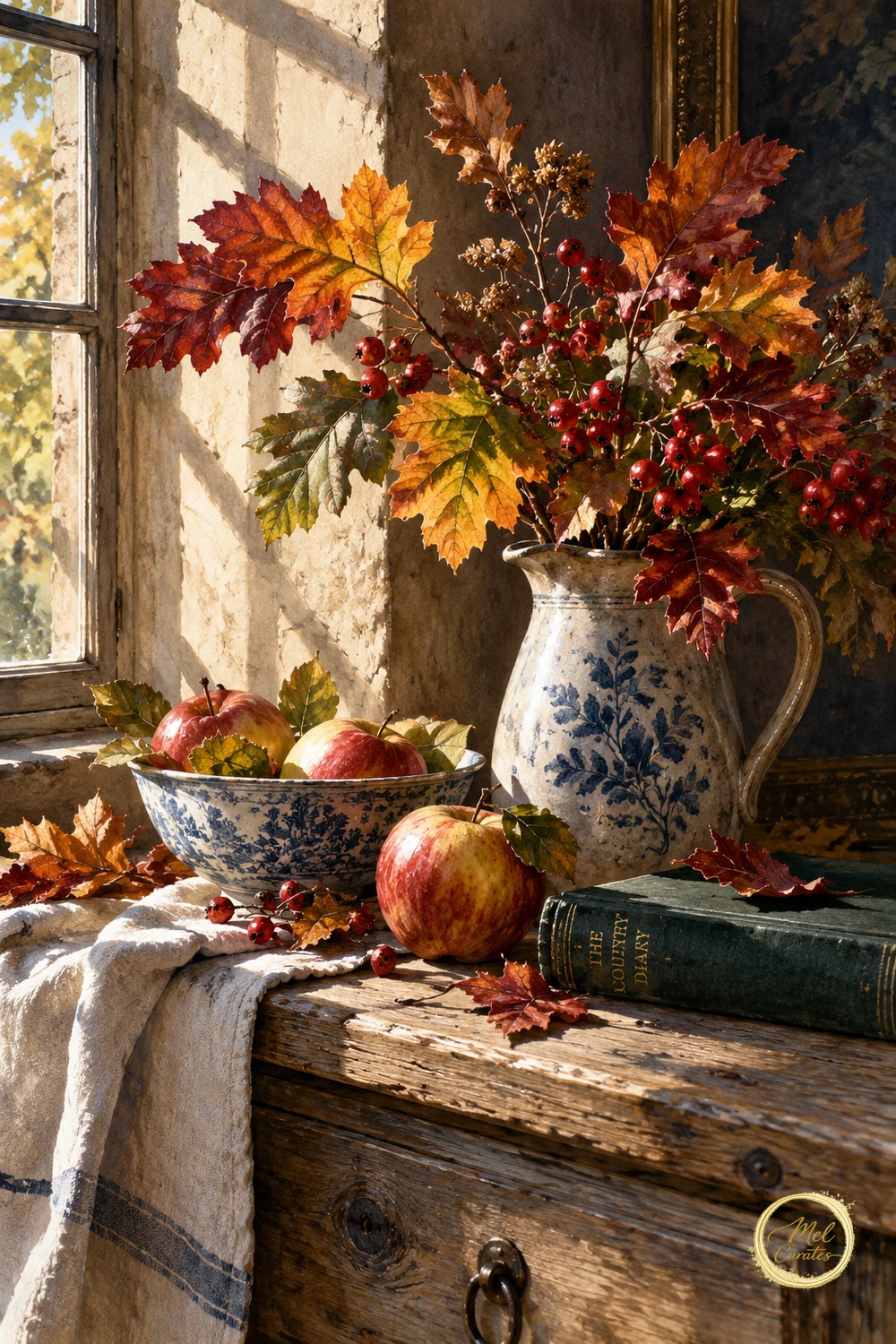
Blue-and-white pottery beside red-yellow apples can be lovely, as can an uneven handmade bowl on an old wooden table. There is room for pieces that don’t match. A favourite mug has survived quite happily without a coordinated supporting cast.
The table should still be a table, though. Leave space for lunch, for a book, for someone to sit down with their own cup. A home is much easier to enjoy when we aren’t constantly moving the decorations out of the way.
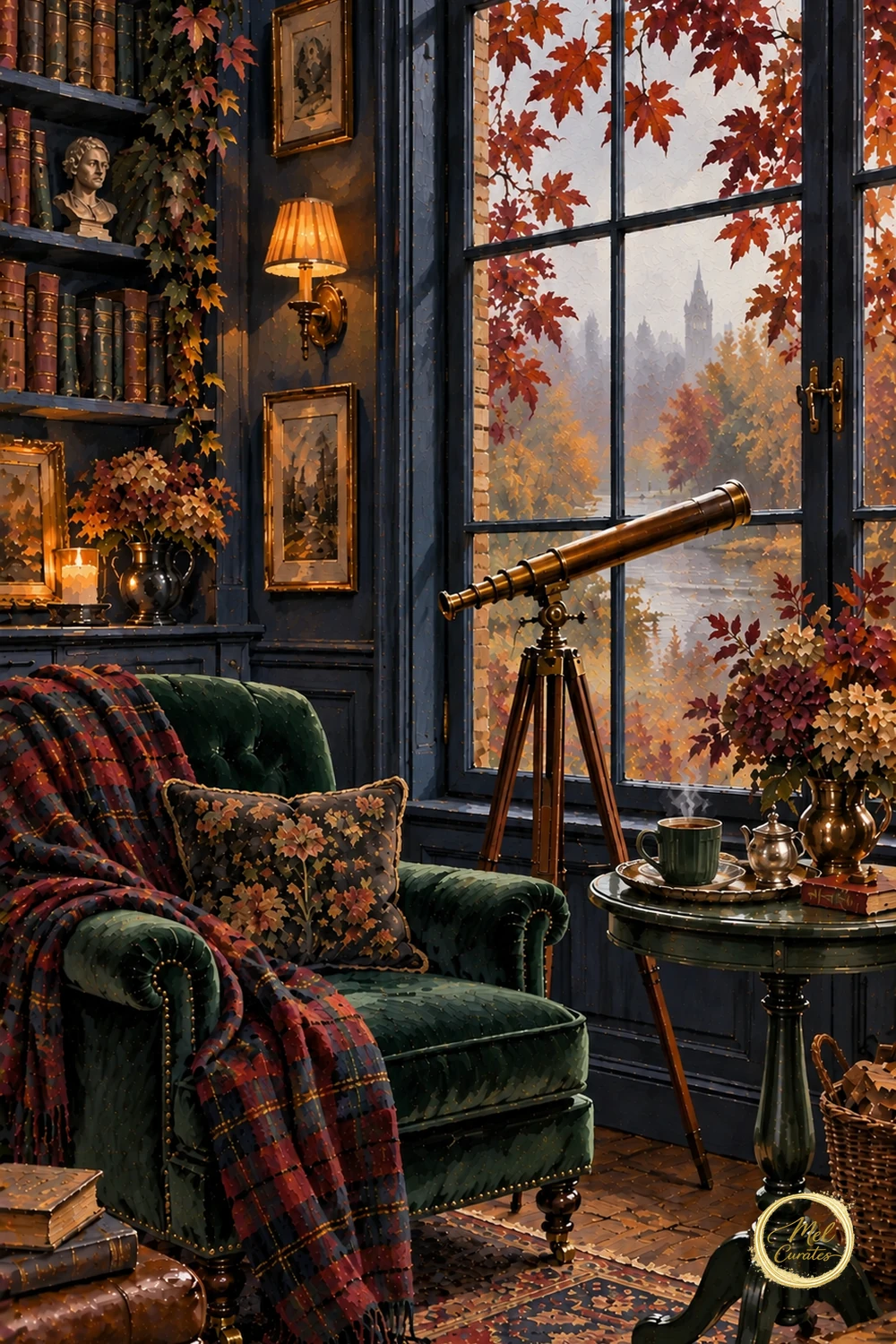
Faces and pictures we want to keep close
Family photographs change the feeling of a room. Among the furniture and the useful things are faces that matter, moments we want to keep, people at different ages. A photograph needn’t be perfectly composed to deserve a frame; sometimes the expression is the whole reason we love it.
Autumn might be the occasion to bring one out of a drawer, or to move a picture somewhere it is easier to see. There is no need to undertake an entire gallery wall. A family photograph beside a favourite print can make a shelf feel personal in a way that a carefully matched set sometimes doesn’t.
Artwork has its own place here. A landscape may remind us of home, or simply be somewhere we enjoy looking into. A drawing might make us smile whenever we pass it. Children’s pictures, postcards and our own photographs can sit alongside bought work without having to apologise for the company.
Existing frames are a good place to start. Their differences can belong to the room too. Keep precious photographs and vulnerable artwork out of direct sunlight, and give the pieces you love enough space to be noticed. The collection can grow gradually, as life supplies something else you want to remember.
Books within reach and warmth in the stitches
A book on a shelf and a book beside a chair make slightly different invitations. The second is much easier to open when the evening has finally left us a little time. Bringing a few favourites within reach can make a room feel ready for us, especially when there is a comfortable seat and enough light to read by.
The books needn’t be chosen for the colour of their spines. A novel can sit beside a garden book, with a much-thumbed collection of poems nearby. That mixture says something about the person who lives there. It also gives them something they might actually want to read.
Handmade textiles bring a more tactile kind of familiarity. In a quilt or crocheted blanket, someone’s work remains visible in the stitches. An embroidered cushion might hold hours of care in a very small space. Whether it was made for us, bought second-hand or chosen from a maker, there is pleasure in noticing the work itself.
A robust blanket can live where it will be used. A delicate piece may need less handling, and any known care instructions deserve attention. But the aim isn’t to make everything look newly arranged. A throw draped over the chair because someone used it last night can be part of the welcome.
Leave room for today
Once we start remembering what our possessions mean, it is tempting to bring everything out. Suddenly the sideboard is hosting several decades of family history, two holidays and a fairly ambitious flower arrangement. Somewhere beneath it all is the place where we used to put the post.
A little breathing room helps. One familiar piece on a surface we use every day may give more pleasure than a crowded display. We can bring something else forward later. Putting an object away for a while doesn’t diminish its meaning, and leaving a corner empty doesn’t mean we have forgotten to finish it.
There must be room for present life alongside the memories. For the cup someone sets down, the book they are reading now, the coat dropped over the chair on the way in. A home gathered over time is still being gathered.
Your meaningful autumn home is already beginning
If you don’t have inherited pieces or travel finds, this belongs to you too. A second-hand book, a photograph taken close to home or the first cup you chose for your own kitchen can begin a history. Some possessions matter from the moment they arrive; others become dear through years of unremarkable use.
Perhaps there is one thing you would like to bring closer this autumn. A photograph you haven’t looked at properly for a while, or a blanket that ought to be doing its job instead of sitting in a cupboard. Begin there, and give yourself time to enjoy the change before making another.
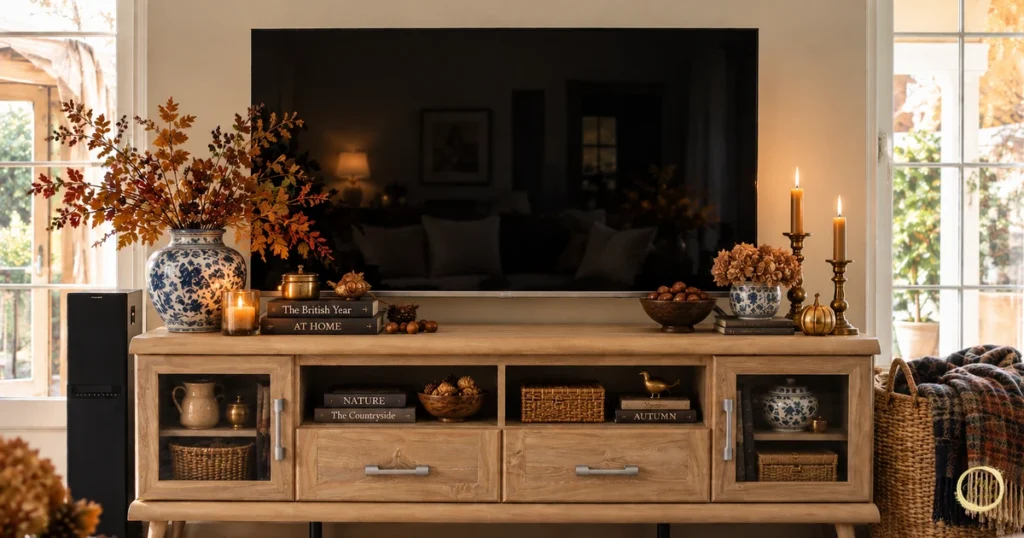
A meaningful autumn home makes space for the things that have become part of your life. The stories needn’t be grand, and nobody else has to recognise their importance. You know why that particular cup is the one you want. Put the kettle on, find somewhere comfortable, and let the room be yours for a while.
Stay a little longer
If something here gave you reason to pause, notice or look again, there’s more quiet encouragement, Scripture, seasonal beauty and everyday noticing across Mel Curates.
Follow along on
And if this reflection made you think of someone, you’re always welcome to share it.