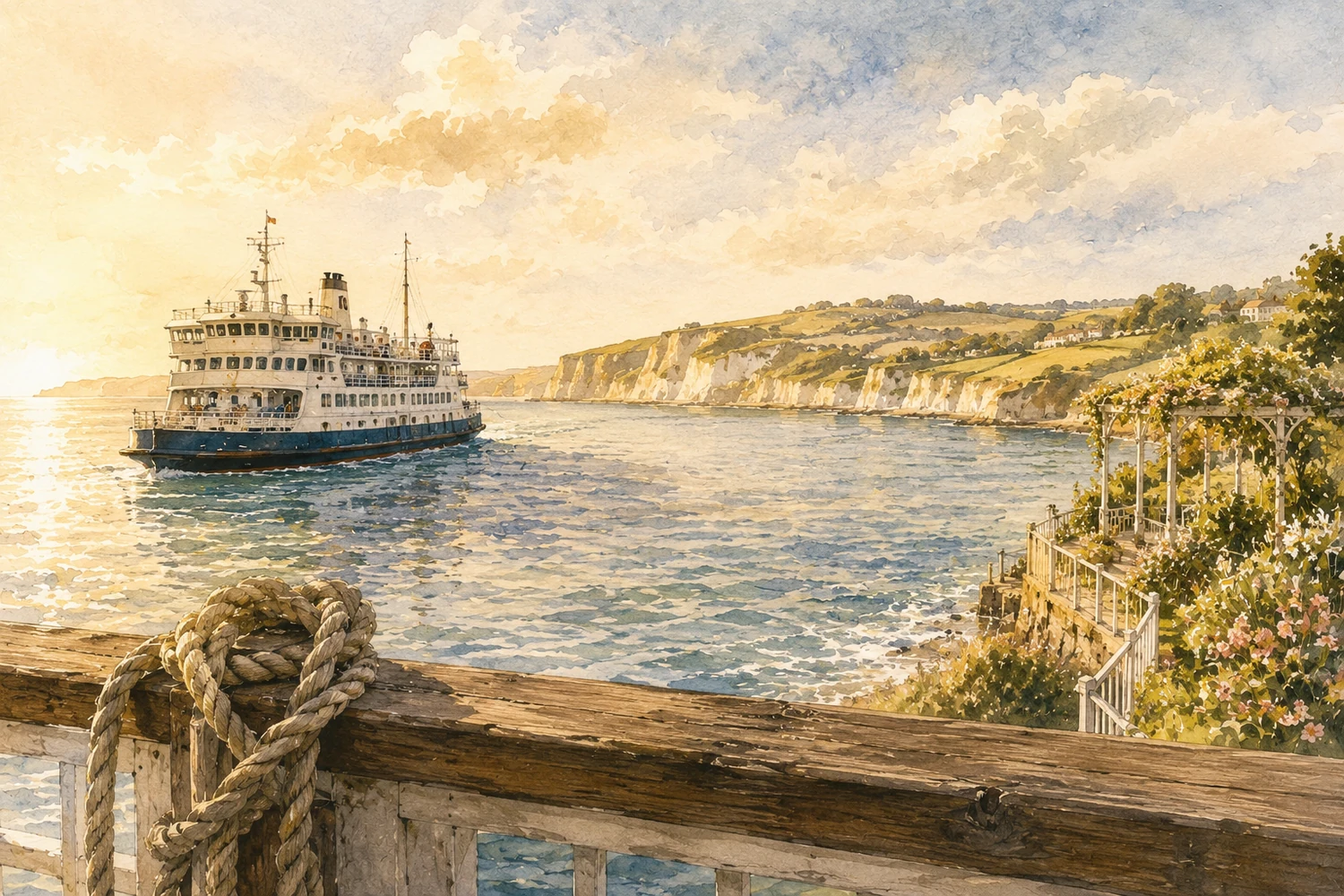
The Isle of Wight sits just a few miles off the south coast of England, reached by ferry from Portsmouth in under an hour — close enough for an easy day trip, and yet somehow far enough that the moment the ferry pulls away from the mainland, life already seems to slow down.
I only made the crossing once, but it’s stayed with me since. The Solent couldn’t seem to make up its mind that day — glass-calm for one stretch, choppy enough the next to send spray up over the bow.
A couple of passengers nearby, clearly seasoned regulars, were comparing notes on it as we went: one saying they’d never seen it change so quickly, another laughing that you take whatever crossing you’re given and just get on with it.
It was such a small, ordinary exchange, but it set the tone for the whole trip — that easy, unbothered way people who know the island well talk about it. By the time Portsmouth’s skyline had shrunk behind us, something had already shifted.
Not the scenery yet.
Just the pace.
Leaving the Mainland Behind
Many journeys to the Isle of Wight begin in Portsmouth, and the city has an energy worth pausing in rather than rushing through. The sights, sounds and smells of Portsmouth Harbour awaken the senses. Ferries come and go in a steady rhythm, naval ships rest proudly alongside the quays, gulls wheel and call overhead, and the gentle clatter of rigging taps against waiting masts. The unmistakable scent of salt hangs in the sea air, while the occasional deep blast of a ferry horn reminds you that journeys are constantly beginning and ending here.
It is a soundtrack—and a scene—that feels unmistakably maritime. The Historic Dockyard sits right by the water, home to HMS Victory, and the Spinnaker Tower rises above it all, offering one last proper view across the Solent toward wherever you’re headed next.
Then comes the crossing itself. Standing on deck, watching the mainland shrink behind you, it’s surprising how short it actually is — well under an hour — and yet those minutes feel like more than a journey across water. They feel like crossing into a different pace of life entirely.
An Island of Many Personalities
One of the things I loved most, travelling around the Isle of Wight over those few days was discovering how different each part of the Isle of Wight felt. Despite its modest size, the island never seemed to repeat itself. Each town had its own personality, its own pace and its own quiet charm.
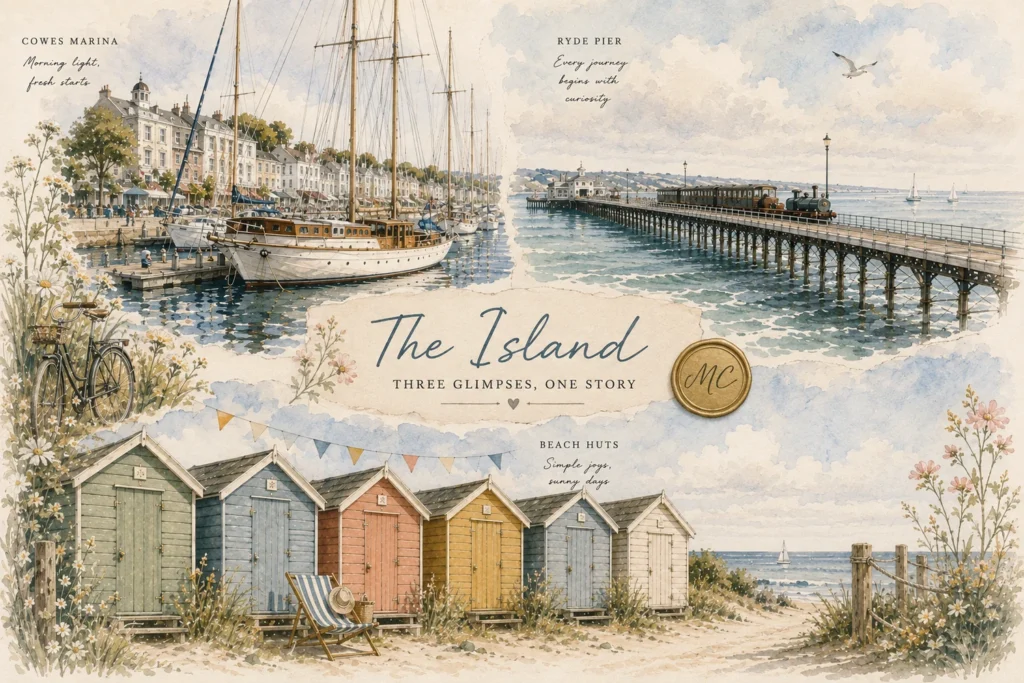
Cowes carries a gentle elegance, shaped by sailing, marinas and life lived on the water. Masts sway softly in the harbour, sailing boats drift with the tide, and there is a calm confidence about the town that feels effortlessly timeless.
Ryde has the cheerful familiarity of a traditional British seaside town. Its long pier stretches out across the Solent, cafés spill gently onto the promenade, and the simple pleasures of the seaside are never far away.
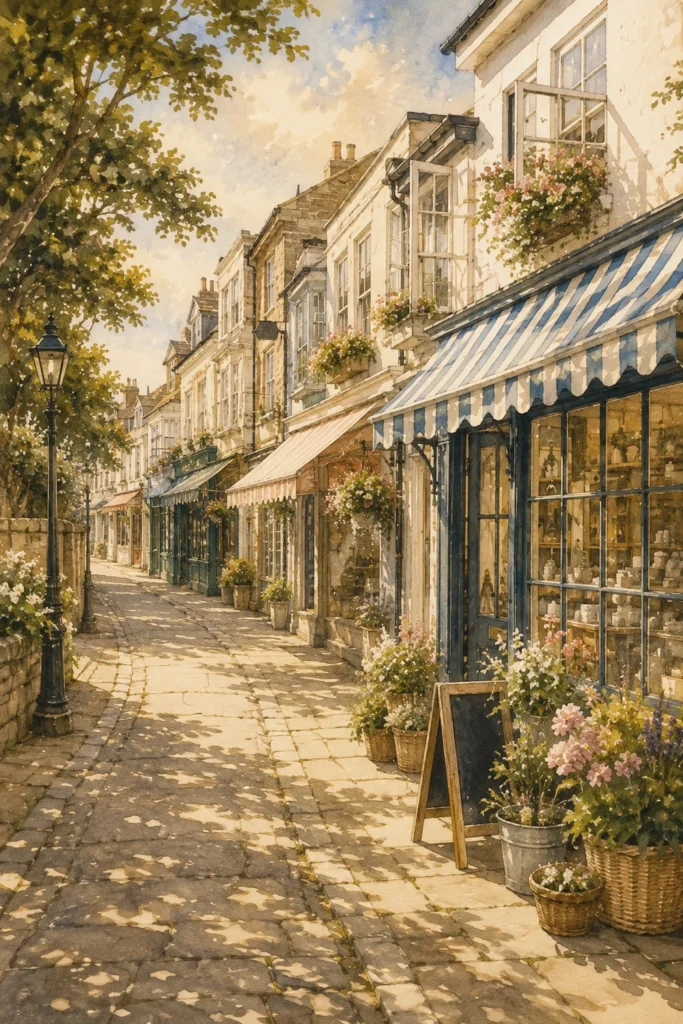
Further south, Shanklin, Sandown and Ventnor each invite you to slow down in their own particular way. Colourful beach huts stand quietly overlooking the sea, gardens tumble with summer flowers, little independent shops encourage unhurried browsing, and the sound of waves seems to follow you wherever you wander. Time feels less important here. There is no urgency to move on to the next place.
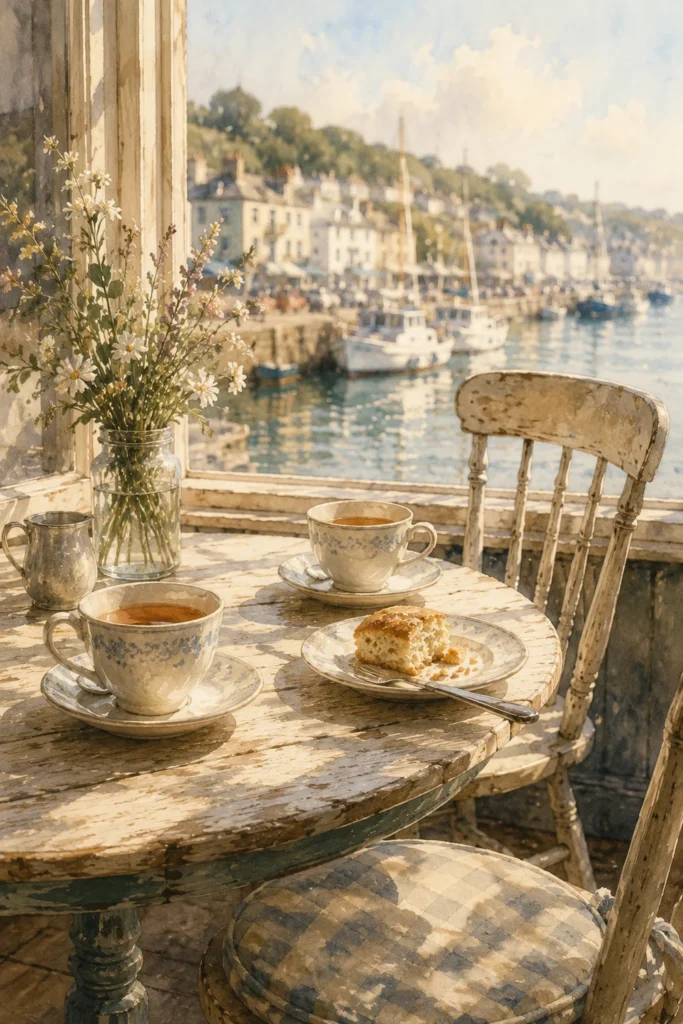
What surprised me most was how naturally the island encouraged a slower pace. We rarely found ourselves checking the time or wondering what came next. Instead, we lingered. We stopped for another cup of tea, wandered a little further than we’d intended, and found ourselves sitting by the sea simply because there was nowhere else we needed to be.
Although the island is relatively small, it never feels repetitive. It feels more like reading different chapters of the same unhurried story, each one gently revealing another side of the island without ever losing its quiet, welcoming character.
Perhaps that’s why it was so easy to strike up conversations wherever we went. When life moves at a gentler pace, people seem to have a little more time for one another.
Conversations That Stayed With Me
Visiting outside the busiest weeks of summer, I found people had time to talk — and those conversations gave me a glimpse into island life that no guidebook ever could. Several people spoke about how dramatically the island changes with the seasons: summer brings visitors, bustling cafés, beaches full of families, and the income that carries many local businesses through the quieter months.
Once the season turns, some cafés reduce their hours, a few seasonal shops close until spring, and the island quietly returns to itself.
Everyone I spoke with talked about the place with real affection — a sense of belonging, and an appreciation for a way of life that seemed to value community over hurry.
As we talked, I found myself remembering how much I loved reading as a child. I remembered that a few of them were set on islands or in small coastal communities where everybody seemed to know one another, shopkeepers recognised familiar faces, and life moved at a gentler pace. At the time, it felt almost romantic—a world that surely couldn’t exist quite like that anymore.
Yet standing on the Isle of Wight, listening to local people talk so warmly about their community, I realised those stories hadn’t been entirely imagined. The setting may have changed with time, but something of that slower rhythm still remained. It wasn’t simply about living on an island. It was about belonging to a place where conversations still mattered and where people had time to notice one another.
It made me wonder whether some places don’t simply have fewer people.
Perhaps they have more time.
Osborne House
Of everywhere we visited on the island, Osborne House has stayed with me the longest.
It wasn’t simply its beauty that lingered in my memory, nor even its royal history. It was the feeling the place left behind.
There was a warmth to Osborne that surprised me. For all its grandeur, it never felt imposing. Instead, it felt wonderfully lived in, as though the walls had quietly absorbed years of family life, laughter and unhurried summer days.
As I wandered through the house and gardens, it became easy to imagine why Queen Victoria returned here year after year. Away from the formality of court life, this wasn’t merely a royal residence; it felt like a family home. Looking out across the Solent, I found myself imagining children racing across the lawns, adventurous afternoons on the beach, picnics beneath summer skies, dinners on the terrace as the evening light lingered, and the simple delight of an ice cream melting a little too quickly in warm little hands.
History often asks us to remember great events.
Osborne gently reminds us that history is also made of ordinary family moments.
Perhaps that was what touched me most.
Walking through the gardens stirred memories of my own childhood, when, for my sister and me, the long summer days seemed endless and there was always space to run, explore and simply be. It reminded me how easily we lose that sense of freedom as adults, and how precious it is whenever we find it again.
The gardens at Osborne House drift gently towards the Solent, where the water glimmers beyond the trees much as it has for generations. Standing there, I realised that Queen Victoria hadn’t simply chosen a beautiful place.
She had chosen somewhere that allowed life to unfold at a gentler pace.
As I stood looking out across the water, I found myself slowing down too.
Perhaps that’s the quiet gift Osborne House still offers today.
Not simply a glimpse into royal history…
…but a gentle reminder that the happiest memories are so often made in the ordinary moments we share with the people we love.
“The Isle of Wight doesn’t ask you to hurry. It quietly teaches you not to.”
When I boarded the ferry back to Portsmouth, I realised the Isle of Wight had given me something I hadn’t quite expected — not souvenirs, not photographs, but a reminder of what life feels like when there’s time to actually notice it.
To linger over a conversation.
To walk without checking the time.
To sit by the sea with nowhere else to be.
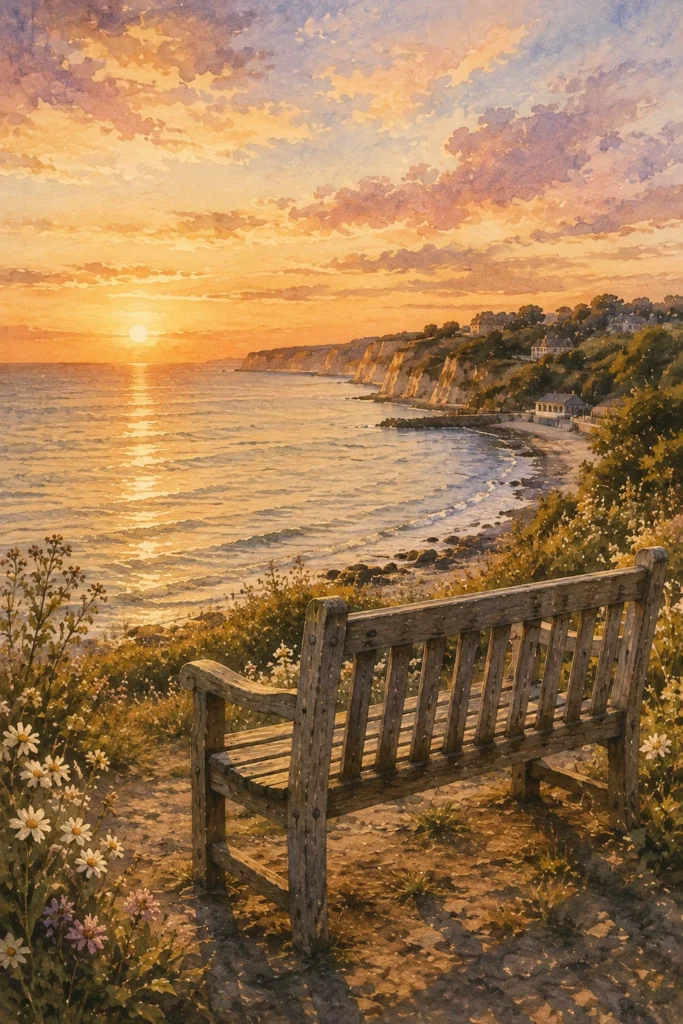
The Isle of Wight doesn’t ask you to escape life. It simply reminds you that another rhythm is possible—one where conversations last a little longer, afternoons unfold a little more gently, and ordinary moments are given the time they deserve.
On the mainland, we are so accustomed to moving with urgency, measuring our days by how much we can accomplish before the sun goes down. But here, across the Solent, the horizon widens and the internal clock resets. You find yourself lingering over a second cup of tea just to watch the tide slip away from the harbor wall, or striking up a conversation with a shopkeeper who isn’t looking past you toward the next person in line.
It is a quiet permission to simply inhabit the present. The island doesn’t offer a dramatic departure from reality, but rather a gentle softening of it, proving that life does not always have to be rushed to be full.
For me, those quiet shores became a living illustration of sacred scripture. It was a physical space where one could naturally “be still before the Lord and wait patiently for him” (Psalm 37:7). In that quietness, away from the noise of the mainland, the truth of Psalm 46:10 echoed clearly: “Be still, and know that I am God.”
When I boarded the ferry back to Portsmouth, I realised the island had given me exactly what I needed. The Isle of Wight doesn’t ask you to hurry. It quietly teaches you how to rest.
It is a physical reminder of a much deeper, spiritual truth—of how much sweeter our rest becomes when we anchor it in God’s promises. As the psalmist beautifully writes in Psalm 62:5: “Yes, my soul, find rest in God; my hope comes from him.” Stepping back onto the mainland, I took comfort in knowing that while the island shores might fade into the distance, that true, soul-deep rest is a landscape we can carry with us anywhere.
If this glimpse of the Isle of Wight has encouraged you to slow your own pace for a moment, I’d love to continue the journey with you on Pinterest, where you’ll find more British summers, quiet corners and everyday beauty waiting to be discovered.