
An End-of-Summer Reflection
The light changes first.
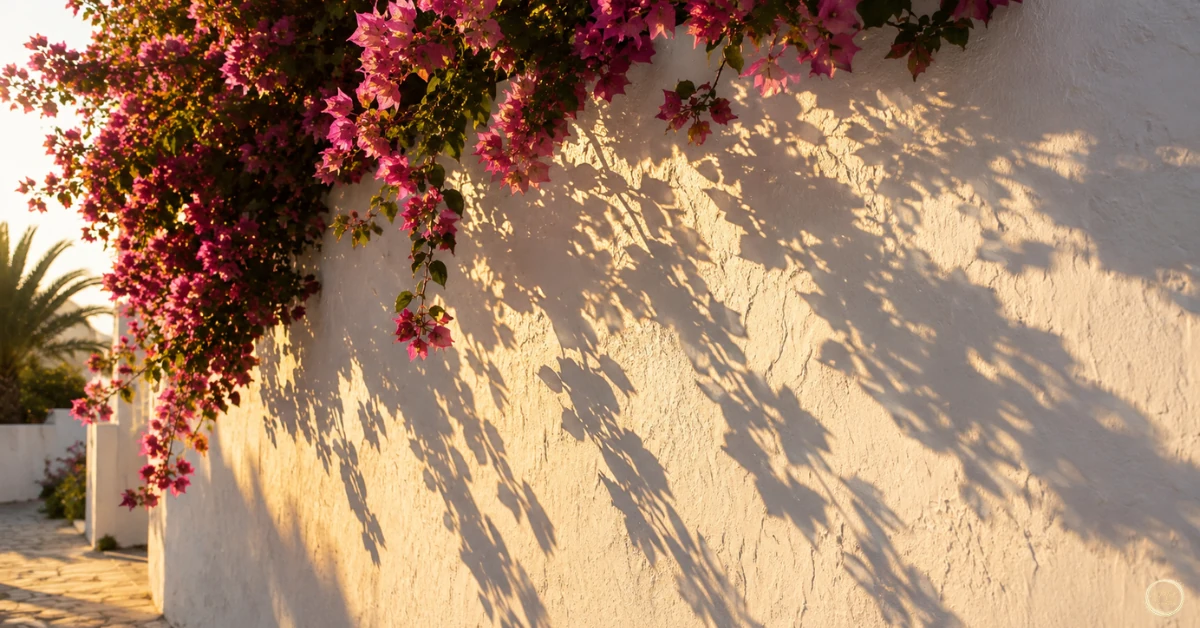
You don’t notice it happening. Not really. Then one afternoon you look up and the room is different. The sun is coming through the window at a lower angle than it did a few weeks ago, reaching further across the floor, catching the edge of a table, a glass, the leaves of a plant.
Late-August light. Still summer light, certainly, but softer somehow. More amber than white. By evening it catches on the tops of grasses and rests there briefly before slipping away, and darkness follows a little sooner than it did in June.
This is the end of summer, or at least the beginning of its long edge, and already there is a temptation to look ahead. Autumn has begun appearing in shop windows and on our screens. Someone, somewhere, has probably unpacked a pumpkin. Those of us who love the season need very little encouragement.
But not yet.
Summer is still here.
Of course, late August doesn’t mean the same thing everywhere. In some places the evenings are beginning to soften; elsewhere the heat remains fierce and windows stay firmly closed against it. And in another part of the world, August belongs to winter entirely. Seasons have always been local things, shaped by latitude, climate and the particular patch of earth we happen to call home.
So this isn’t an instruction to find my summer where you are.
It is simply an invitation to notice yours.
While Summer Is Still Here
There is a strange thing we do when we know something is coming to an end: we begin leaving it before it has actually gone.
Perhaps anticipation does that to us. We see the first suggestion of the next thing and turn towards it, particularly when the next thing is something we love. By late August, I am more than capable of becoming autumn-hungry. I love the colours, the food, the abundance of it, that first sense of the year gathering itself inward.
But there is a difference between anticipating what comes next and being present to what is here.
Summer hasn’t finished its sentence yet.
There are still flowers blooming as though nobody has told them the month. Fruit is still ripening. The trees are green. In some places, washing dries almost before we’ve finished hanging it; in others, the air-conditioning continues its steady hum and the idea of reaching for a cardigan is faintly ridiculous.
The season doesn’t need to look the same everywhere for us to recognise it. Summer has different habits depending on where we live.
And while summer is still here, perhaps we can let it be.
The Summer We Are Actually Living
We spend a surprising amount of time waiting for summer.
We wait for longer days, warmer evenings, gardens in bloom, holidays, bare feet, cold fruit, meals outside and that first evening when we realise we’ve reached the part of the year when the light seems to have nowhere else to be.
Then summer arrives and, quite quickly, becomes ordinary.
We complain about the heat. We swat insects away from our drinks. We water things and forget to water things. Gardens that looked fresh and full of promise at the beginning of the season become slightly unruly. The grass gets tired. Flowers that seemed miraculous when they first opened have been there so long that we’ve almost stopped looking at them.
In very hot places, summer has its own peculiar rituals. Curtains are drawn against the strongest part of the day. Errands are rearranged around the heat. We step from an air-conditioned building into the outdoors and remember, instantly, why we were inside.
Elsewhere, windows stay open long after supper. People sit outside until the evening cool finally sends them in. Summer rain arrives against warm pavements and leaves that unmistakable smell behind.
None of this is the curated summer we imagine in February. It is the summer we actually live — glorious days and sticky ones, holidays and ordinary Tuesdays, beautiful gardens and pots we forgot to water. Sometimes there is a perfect evening. Sometimes there is a mosquito.
Perhaps affection becomes more believable when we admit both.
This is the part I don’t want to turn into a list of things we are about to lose. The peach on the kitchen counter does not need to become one of the last peaches of summer to be worth eating. The flower in the garden doesn’t need the melancholy burden of being the final bloom. An evening doesn’t have to be counted among the last long evenings before we decide to pay attention to it.
Sometimes a peach can simply be a peach.
So I want to notice what is here without immediately translating it into what comes next: the sound of insects after dark, cold water when the day has been hot, bare feet on a cool floor, flowers grown a little wild, the smell of rain, the particular weight of warm air after sunset.
Where I am, some of those details will be different from yours. Perhaps your mornings have begun to cool. Perhaps they haven’t. Perhaps summer where you live is green and gentle, or humid and stormy, or so hot that the kindest part of the day begins after sunset.
The signs are different everywhere. What matters is that we notice our own — not because everything must become meaningful, but simply because it is here.
Working One Season Ahead
There is a small irony in writing all of this because, while I’m asking us to stay with summer, part of my own attention has already turned towards autumn.
Some of that is simply the rhythm of the work I do here. Seasonal things need thinking about before the season fully arrives. Words need writing, images need making, ideas need gathering and sending out into the world while there is still time for them to find the people who might enjoy them.
Pinterest, in particular, has very little interest in waiting until I’m emotionally ready for pumpkins.
So yes, there may be autumn leaves appearing here while the trees outside are still green. I may be thinking about russet and mustard while summer light is pouring through the window, or writing about soup on a day when soup is quite possibly the last thing the weather calls for.
It is a peculiar privilege of creative work: sometimes you live in one season while making things for another.
And perhaps doing that has made me more aware of the difference between preparing for what comes next and actually being there.
I can make the autumn things. I can gather ideas and choose colours, think about pumpkins and gardens going to seed, and begin preparing a place for the season that is coming. Some of that is work — even when it is the sort of work no one is technically paying me to do.
But I don’t have to move there yet.
Outside the work, summer is still asking to be lived. There is fruit in the kitchen, warmth in the evening, green in the garden and light falling through the day in its own particular way.
Autumn can wait for me in the drafts folder.
For a little while longer, I would rather be here.
This Particular Summer
Perhaps this is why the end of summer can make us unexpectedly attentive.
Nothing has to change dramatically. The awareness that time is moving is sometimes enough to make familiar things visible again. A room we’ve walked through all summer looks different when the evening light reaches a new corner. A flower we’ve stopped noticing suddenly catches our attention. We realise that a small habit — where we sit after dinner, what we eat, when we go outside — belongs specifically to this part of the year.
A smell, a particular slant of light, a meal we kept making without noticing — these are the things a season actually leaves behind, and years later they can return us to a place with startling clarity. I’ve written before about how ordinary moments become memories without us realising it. Which is to say: this summer is not summer in general. It is this one — this exact, unrepeatable one, already turning into memory as it goes.
This particular summer has had its own mornings, its stretches of fierce heat and its storms, its plans and interruptions, its meals and conversations. It has had flowers that bloomed and went over while we were busy doing something else, grass that turned gold before its time, and evenings when nothing remarkable happened at all except that the light stayed longer.
Some of it we will remember. Most of it, probably, we won’t.
That doesn’t make the ordinary days less valuable. If anything, it reminds me how much of a life is made from days we will never specifically recall.
Summer will come again. But this summer won’t.
The Preciousness of Ordinary Things
There is a danger, when we start talking about time passing, of making everything terribly earnest.
Treasure every moment.
We can’t.
Nor, I think, are we meant to walk around permanently conscious of the significance of our own lives. We have washing to put away. Emails to answer. Dinner to make. Someone has misplaced something. The plant needs watering. Again.
Most days have to be lived before they can be understood.
But the preciousness of ordinary things has a habit of becoming visible just as they begin to pass. Not because they suddenly become more important, but because change interrupts familiarity. We look again.
“This is the day which the Lord hath made; we will rejoice and be glad in it.”
— Psalm 118:24
There is something about remembering that God is present in an ordinary day that lifts it beyond the ordinary. Nothing around us has necessarily changed. The same tree stands outside the window. The same bird is singing somewhere nearby. The same washing needs folding, the same emails need answering, and the mood we woke with may not have been particularly good.
And yet, we remember: God made this day. He allowed us to wake to it, to witness it, to be part of it.
Suddenly the leaf seems greener. The bird sounds sweeter. Even a difficult mood can loosen its hold a little. Not because we have manufactured gratitude or managed to turn an ordinary Tuesday into something profound, but because acknowledging God changes the way we see the day we have been given.
The extraordinary was never that something remarkable happened. It was that God was present in the ordinary all along — and we were here to witness it.
Perhaps that is enough — not a command to make every remaining summer day memorable, not a frantic attempt to squeeze meaning from the season before it goes. Just the quiet recognition that this day, too, came from God.
So live in it. Eat the fruit because it is good now. Sit outside because the evening is pleasant now. Look at whatever is flowering because it is flowering now. Enjoy the cool of an air-conditioned room after the heat outside, or the pleasure of an open window if your summer allows one.
Not because any of these things are remarkable, but because today they are here, and so are we.
No Farewell Yet
So I’m not going to say goodbye to summer. Not today, anyway.
There is still a little time for the turning season. Time to notice the first small signs and follow them towards whatever autumn looks like where each of us lives. There will be time for mustard and russet, apples and seed heads, pumpkins and soup.
Apparently, Pinterest and I will be discussing those things rather sooner. But outside the drafts folder, summer is still here.
The day is warm. Something is still flowering. Somewhere fruit is ripening, rain is falling on hot ground, a child is running through water, washing is drying, a fan is turning, a window is open — or firmly closed against the heat.
And somewhere else in the world, another season entirely is unfolding.
For now, this is the one in front of me.
I don’t need to make it last.
I only need to be here while it does.

Live in the day, plan for what lies ahead! Same is for the clothes industry, the food industry, and many more…there is always a time to prepare which is sometimes much longer than the time we see it when the time comes…like the plants, it takes them long to grow, before they start flowering or giving fruits
Indeed.
There is wisdom, then there is wisdom partnered with understanding.
Building or establishing the foundation is always key and should take time, if done well. 🙂
Mel xx